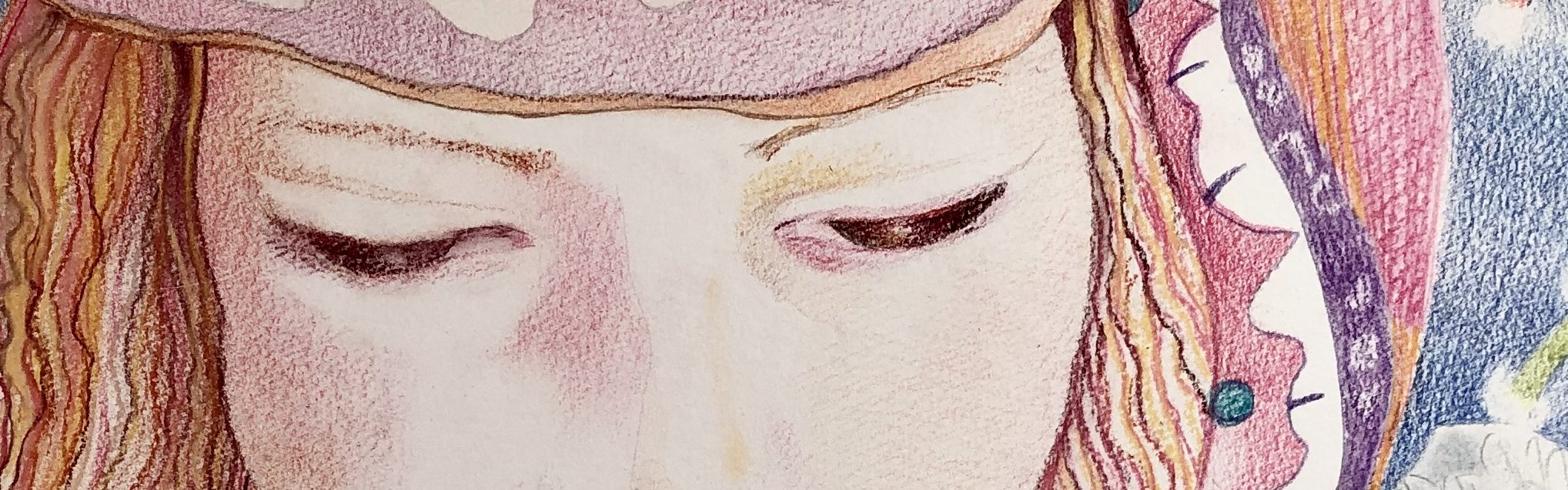
A Very Public Crime
(new novel, fourth, in progress, working title)
Chapter Three
Chiaroscuro
It was the visiting hour in Ward 23. The visitors were talking softly. To patient Marwan, the hubbub of their conversations was calming. He rarely had visitors himself and there were none for him that day. At such times, he liked to keep busy with his pencil.
There was no one for the new patient opposite who had arrived in the afternoon and was presently sitting on his chair beside his bed. He sat still posing himself like a perfect model. He was middle-aged with greying hair and looked reminiscent of someone, maybe the famous Egyptian film star who went to Hollywood, Omar Sherif. He had the same refined features and would have turned heads in better times. Patient Marwan imagined sunlight rippling over his face, his eyes smiling and a show of perfect, white teeth. Perhaps he was still a head-turner.
But that was not how he looked now, not when all the life in him had gone. Patient Marwan drew him in rough outline and shaded him in silhouette. The hollows round his eyes were etched feint in grey chiaroscuro. It was a sketch of soft cross-hatchings, smoothed with the rubbing of his finger, He would refine it later. It could have been a self-portrait, of himself as an effigy of restive stillness, running on empty, staring but not seeing. Except that Marwan saw everything.
The film star lookalike had been frozen in his pose for almost half an hour. It looked stressful to sit that way, so rigidly straight-backed. Patient Marwan used the visiting time remaining to trace the wisps of hair that half-framed his sitter’s head, the arch of his eyebrows turning grey just suggested, his eye sockets which added depth, the cheek bones which caught the light and the sagging jowls which joined the folds of his neck. He had treated him gently, kindly, searching for the soul within that had vacated its devastated body. He paused and saw that, contrary to the dreamy image he had imagined, he had drawn the new patient both with the probing of a mystic and the precise incision of a surgeon’s knife. His sketch revealed more than his eyes could have seen, something bedded deeper than the surface stillness. Patient Marwan the artist was pleased with that, and, at the same time, he was concerned about the mental state of the unwitting sitter whose stasis he had taken advantage of. Could the new patient be meditating?
It was in the few remaining minutes of the hour, when Marwan was folding his notebook closed that the answer came. The new patient flung his blanket and pillow across his bed, upsetting his tray, plastic water-jug and pills sent flying. Oblivious to the clutter around him, he then stood by his upturned chair, flung his arms wide, and delivered a blistering rant that ruptured the sedated quiet of the psychiatric ward.
It didn’t help that his guttural shout was unintelligible. It sounded like a threat. It was a rupture like the breaking of plate glass – a cry born out of nothing intelligible to those who did not know him. Patient Marwan recognised the shout as a cry of distress.
A coin had been thrown along with the pillow. It had rolled under the patient’s bed and went on rolling. Patient Marwan listened to it spinning until it fell flat with a tiny clink.
By five minutes to eight, all visitors had been ushered out. A doctor was called and the new patient, whom they called Ismael, was sedated. At five past, he was safety tucked in bed, and the day nurse Aisha was preoccupied with recording the incident.
Patient Marwan felt uneasy. He told the nurse he thought a conversation would have been better, a few moments of listening to the man, a few words of comfort. For him, words were everything; but just now he couldn’t find the right ones to describe what he had seen. He, the self-styled wordsmith, was searching for the right word. Some feelings just don’t have words to match them.
“You will not be aware, my dear,” the day nurse Aisha advised him when she found a minute to spare. “But he’s been transferred from the cancer ward. It all happened without a moment’s notice. But he will settle now.”
So the matter was dealt with, it seemed. The ward was quiet again. The disruption was smoothed over. Perhaps it was considered best forgotten, and must therefore be exiled to the amnesia of a long night’s lack of sleep. Before consigning his pad and pencil to his locker, patient Marwan drew a faint outline of the distraught new patient in a style more suited to a cartoon, the face possessed by a scream. Not original he knew. It had been done before by someone much more talented, but it said some of what he wanted to say. There remained the more that was crucial, which, like the word, eluded him. He did not expect to sleep well.


 Nita Nicholson